Cross-platform
Cross-platform apps
A single codebase for every device: your business rules apply the same way everywhere, and there is one team to call when something needs changing.

Custom software for mid-sized industry
Looking for custom software development that fits the way you already work? We build business applications, backends, interfaces and mobile apps that work together and grow with your company. Twelve years, more than 50 projects, for clients including SAP, CLAAS, DHL, techem and flaschenpost.
Book a free initial consultation See our servicesPlenty of suppliers promise custom software. The difference usually shows in the second year, once the first version is running and nobody is left who can explain the decisions behind it. These are the reasons our clients stay.
Your business rules are written once and used by the backend, the web application and the app at the same time. What you define in one place applies everywhere. Nobody has to maintain the same rule in three places and forget one of them.
Azure, Entra ID, Microsoft 365 and Dynamics are everyday work for us. Sign-in, permissions and operations fit into the environment your company already runs.
We have rebuilt long-running applications without taking them offline, among them MEDIFOX DAN CareMobile and flaschenpost. Xamarin to .NET MAUI migrations are part of that.
SAP, CLAAS, DHL, techem, OBI and flaschenpost have trusted us with business-critical applications. We bring that same care to projects far smaller than a corporate programme.
Cayas is a former Xamarin Premier Consulting Partner and has been building software for companies since 2013. Many applications from those early years are still in service and still developed by us.
The browser application, the app on the device and the interfaces to your existing systems are built by the same team. One group of people is accountable for how the parts fit together.





We regularly advise companies against building their own software. If a finished product covers your workflow well, it is the cheaper choice, and you will hear that from us in the first conversation. Custom software earns its cost where your process is the thing that sets you apart.
Build your own when
Stay with off-the-shelf when
Both have their place. The table shows where they differ in daily use, beyond the purchase price.
| Criterion | Off-the-shelf software | Custom software |
|---|---|---|
| Fit to your process | You adapt your workflow to the product | The software follows your workflow |
| Upfront cost | Low, often licence and setup only | Higher, but a one-time investment |
| Cost over time | Per-user licences, rising as you grow | Hosting and ongoing development, independent of headcount |
| Who sets the roadmap | Follows the vendor roadmap | Follows your priorities |
| Source code and data | With the vendor, export often limited | Yours, including the right to take it elsewhere |
| Changing supplier | Costly, data and processes are tied to the product | Possible, you can continue with any team |
| Liability in an outage | Per licence terms, usually tightly capped | Agreed contractually with your development partner |
| Time to introduce | Weeks | Months, with usable stages along the way |
We hear this more often now that AI assistants produce working code in minutes. For a prototype or an internal helper tool that is a good route, and we use the same tools in our own daily work.
For business-critical software the question changes. Since the EU product liability rules were recast in 2024, software counts explicitly as a product. If your application goes down during business hours, passes wrong values to a neighbouring system or exposes data, your company is liable. An AI assistant writes code, but it carries no responsibility, and neither can an employee who built the application on the side. The calculation that matters is therefore not what development costs, but what an outage costs and who answers for it.
How we work
Four phases, and you decide again after each one. You never commit to a project you cannot yet see the whole of.
We choose technologies by asking whether you will still be able to run and staff them in five years. That is why we work with a deliberately narrow toolkit around .NET and C#. We know it in depth, and you will still find developers for it years from now.
Here is what that buys you day to day: your business rules live in one place and are used by the backend, the web application and the mobile app at the same time. A rule you define once applies everywhere. It is also why we use .NET MAUI for cross-platform work: not because it saves effort, but because a single codebase means one team is accountable for the whole thing and your application behaves the same on every device.
C# and .NET for business applications, background processing and data storage. Alongside them SQL Server and PostgreSQL, Entity Framework, and automated tests that run on every change.
Azure for hosting, sign-in through Entra ID, and permissions that match how your organisation is already set up. On request in your own data centre, if your data may not leave the building.
Web applications for the desk and cross-platform apps with .NET MAUI. Native with Swift, Kotlin or Java where the case calls for it. The interfaces are shaped together with our UX and UI design.
AI assistants support our development work, and where it holds up in practice we build AI features into your application. Responsibility for the result stays with people you can call.
More on the decision criteria and the cost drivers behind these technologies is on our app development costs page and in our guide How much does app development cost. If you would rather build up your own team, we share what we know in our training courses.
Connected properly
New software never lands on empty ground. There is an ERP, a database that has grown over years, a warehouse system, perhaps a portal from an earlier project. The new interface is rarely the real work. The real work is making all of it play together reliably.
We connect SAP and Microsoft Dynamics, work with Azure and Entra ID, and build Web APIs and interfaces where a system offers none. For every piece of information we define which system is the leading source, and we log what was transferred and when. Years later, and without us, it is still possible to establish which value applies.
More on APIs and interfaces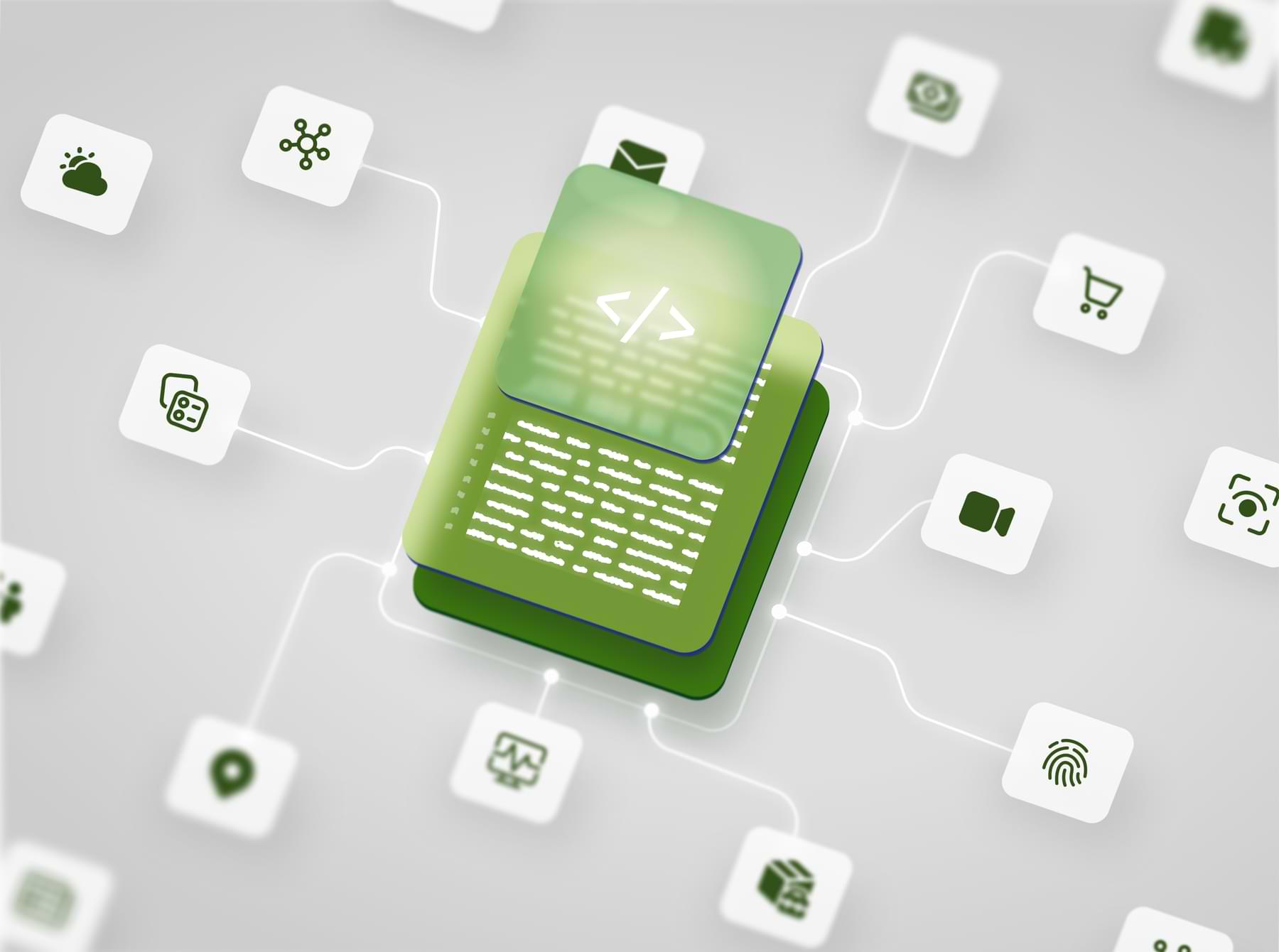
Grown systems
An application that has run for ten years holds ten years of domain knowledge. It is almost never fully documented. It lives in the edge cases someone added because a customer needed them. A rebuild from zero loses that knowledge, which is exactly why rebuilds so often cost more than planned.
We take a different route: first examine what actually runs in production, then lift out individual parts and renew them behind a fixed interface while the system stays in service. You see real improvements within a few months. There is no single cut-over date two years out whose outcome nobody can predict today. We have run many Xamarin to .NET MAUI migrations, and the technical detail is in our article on Xamarin migration.
We advise a full rebuild when the technical foundation no longer receives security updates, or when the underlying model no longer matches how your business works today.
Have your existing software reviewedA reliable figure only exists once your case is known. The scope of the software drives it, along with the number of user roles, the systems that have to be connected, your requirements for security and audit trails, and whether data from older systems has to be migrated.
That is why we set a budget one phase at a time. You decide again at every handover point, and you pay nothing for assumptions that turn out to be wrong along the way.
Concrete price ranges, worked examples and every cost driver in detail are collected on a page of their own. The breakdown applies to app projects and custom software alike, because the same factors drive the effort: app development costs.
See the cost breakdownMobile custom software
Many of our projects have a mobile part, because that is where the work happens: in the warehouse, in the service van, at the customer site, at the machine. The app is then another way into the same custom software, not a second project alongside it. Business rules and data model stay the same, only the interface differs.
Our page on having an app developed goes into the detail. Delivered examples are in our references, such as the telematics app for CLAAS.
Expert as a Service
Not every undertaking needs a full project. Our Expert as a Service model is the alternative to handing everything over: our developers extend your team where knowledge or capacity is short, and you keep control of your custom software.
Whether that means temporary support on a running project or expertise in a particular technology, we fit into your structures and leave them as they are.


Training
Sometimes what you actually need is a team that can carry on building by itself. Our training courses get your developers familiar with the tools and working methods we use ourselves.

»Cayas Software is an excellent team! I personally enjoyed the energy and the professional support the whole team gave us throughout the project.«
Custom software for companies
FAQ
There is no single figure worth giving before we know your case. Four things move the number most:
We budget one phase at a time, so you can stop or change direction after any of them. Worked examples and full price ranges are on our app development costs page.
Off-the-shelf software is a finished product built for many companies. You pay licence fees and adapt your processes to the product. Custom software is built for your case: it follows your processes, it belongs to you, and its future development follows your plan, not a vendor roadmap.
As long as your process matches the market standard, off-the-shelf is the cheaper and simpler choice. Once your workflow is a competitive advantage, or you are holding it together with workarounds and spreadsheets, you start running into its limits.
The timeline follows the scope: the number of user roles, the systems to be connected, and whether legacy data has to be migrated. We give you a reliable schedule at the end of the concept phase, once the project has been broken down. Before that, any date would be a guess.
Because we deliver in stages, you can try out a usable part of the system in daily work long before the whole project is finished. That does not shorten the overall timeline, but it moves the important insights forward, while changes are still cheap. Typical project durations by project size are listed on our app development costs page.
You do, outright. The code we write for you is yours, together with:
Nothing stops you taking the whole thing to another supplier or bringing it in house, and you do not need our permission to do it. Open-source libraries keep their own licences, which we list in the project. Mid-sized companies ask this early and they are right to, because plenty of suppliers leave the answer vague.
Most of the time we recommend modernising. A system that has run for a decade carries knowledge nobody ever wrote down, and starting from zero throws that away. Our approach is incremental: we map what the live system really does, then replace it piece by piece behind a stable boundary, with no downtime for the people using it.
A full rebuild makes sense in two situations: the platform underneath has stopped receiving security patches, or the way it models your business no longer matches how you work. Migrations from Xamarin to .NET MAUI are routine work for us.
Yes. This is ordinary work for us, not a project of its own. We connect ERP systems such as SAP and Microsoft Dynamics, and we work with Azure, with Entra ID for sign-in and permissions, and with Microsoft 365.
Where a system exposes nothing we can use, we build a Web API that joins it up and records every transfer. We also settle early which system owns which piece of data, so that nobody has to guess later whose number is the right one.
Go-live starts the longest phase in the life of custom software. We keep runtimes and libraries current, apply security updates, watch errors and load in production, and add new functions in planned releases.
For applications that cannot go down during business hours, we put response times and availability in writing. If you want to look after the software yourself later on, we hand it over to your team and support the handover. For the period after that, our Expert as a Service model stays open to you.

The next step is a conversation, not an order
Tell us where your workflow is stuck today. We listen, take it apart, and come back with an assessment of whether and how building your own software pays off. What you can expect from us:
Start with a no-obligation conversation and lay the ground for something that still fits your company in five years.